On this page
Overview
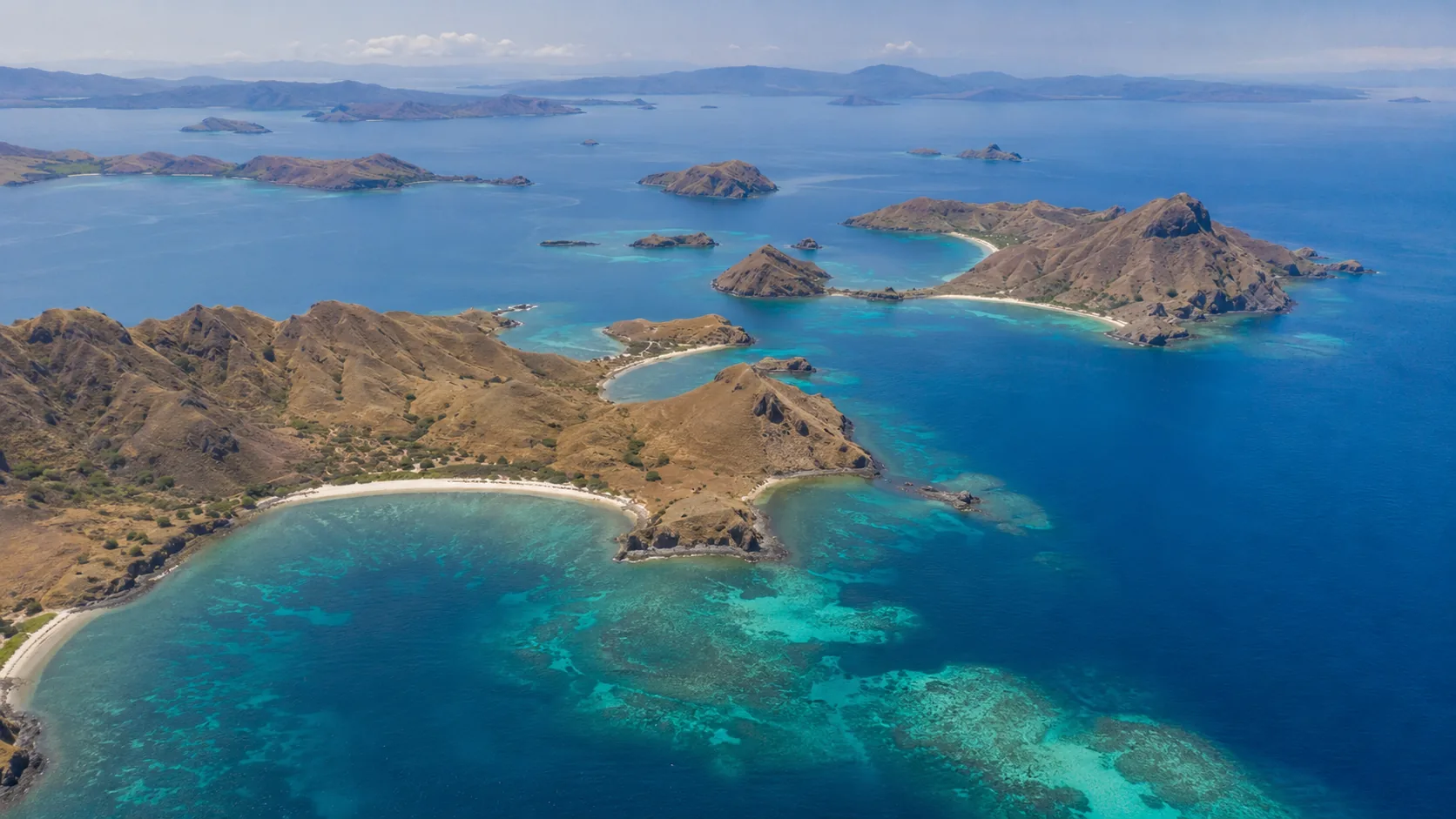
Komodo National Park is a protected area covering dozens of islands, coral reefs and open sea in Indonesia’s East Nusa Tenggara province. It was established to protect the Komodo dragon and its habitat, and has since grown into a broader conservation area recognized for both terrestrial and marine biodiversity.
- Established
- 1980
- UNESCO recognition
- World Heritage Site since 1991
- Main islands
- Komodo, Rinca, Padar, plus many smaller islands
- Ecosystems
- Dry savanna, monsoon forest, coral reef, open sea
History and Protection
The park was established in 1980, initially focused on protecting the Komodo dragon and its immediate habitat. Its scope has since broadened to include marine conservation across the surrounding waters, recognizing the reefs and marine life as integral to the wider ecosystem. UNESCO added Komodo National Park to its World Heritage list in 1991, citing both its unique terrestrial wildlife and the significance of its marine environment.
Islands Inside the Park
The park includes three larger islands that make up most visitor itineraries — Komodo Island, Rinca Island and Padar Island — along with numerous smaller islands and islets. Pink Beach, a well-known snorkeling stop, sits along Komodo Island’s coastline rather than being a separate island. For a direct comparison of the two dragon-viewing islands, see Komodo or Rinca: Choosing the Right Island.
Wildlife Beyond the Dragon
While the Komodo dragon is the park’s signature species, the wider ecosystem supports Timor deer, wild boar, long-tailed macaques, various bird species, and a range of reptiles. These species also form part of the food web that sustains the dragon population, particularly deer and boar as prey species. See our full Komodo Dragons guide for wildlife-specific detail.
Marine Environment
The waters within and around the park are recognized for significant marine biodiversity, with coral reef systems, seagrass beds and a wide range of fish and marine invertebrate species. Strong currents in parts of the park support nutrient-rich waters, which in turn support the marine life that draws snorkelers and divers to sites throughout the area, including around Pink Beach.
Visiting the Park
Most visits are organized as multi-stop boat trips departing from Labuan Bajo, combining a wildlife-viewing island, a hiking viewpoint, and time in the water at a reef or beach stop. See Choosing the Right Komodo Island Tour for how trip formats differ, and Build Your Komodo Itinerary for day-by-day planning ideas.
Park entry procedures, permits and any fees are set by park authorities and can change. Confirm current requirements with your tour operator before booking.
Getting to the Park
Almost all park access runs through Labuan Bajo on Flores, reachable by flight from major Indonesian hubs. From there, boats depart for the park’s islands and dive or snorkel sites. See How to Get to Komodo for the fuller travel picture and Best Time to Visit for seasonal planning.
Frequently Asked Questions
Is Komodo National Park the same as Komodo Island?
No. The park is a much larger protected area including Komodo Island, Rinca, Padar and many smaller islands plus surrounding sea. Komodo Island is one part of it.
How many days do I need for the park?
This depends on your interests and trip format; see our itinerary guide for one, two and three-day formats.
Is the park only about Komodo dragons?
No. While the dragon is the best-known resident, the park also protects significant marine biodiversity and other terrestrial wildlife.